Description
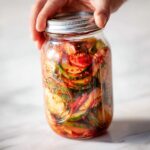
Quick Radish Kimchi is a vibrant, spicy Korean side dish made with crisp radishes, scallions, and a flavorful blend of chili flakes, garlic, and ginger. This easy-to-make kimchi can be enjoyed immediately or fermented for enhanced tang and depth of flavor. Perfect as a condiment or accompaniment to meals, this recipe yields 10 servings and requires minimal prep time.
Ingredients
Scale
Vegetables
- 2 pounds radishes, cut in half or quarters
- 10 scallions, cut into 1-inch pieces
- 1-inch piece ginger, finely chopped
Seasonings
- 2 tablespoons salt
- 1 tablespoon sugar
- 1/3 cup Gochugaru (Korean chili flakes)
- 3 tablespoons chopped garlic
- 2 tablespoons ponzu or fish sauce
Instructions
- Salt and Sugar Radishes: Combine the radishes with salt and sugar in a large bowl, then let them sit uncovered for at least 1 hour and up to 3 hours. This step draws out moisture from the radishes, softening them and beginning the fermentation process.
- Add Flavorings: After the radishes have rested, add the scallions, gochugaru, chopped garlic, ponzu or fish sauce, and finely chopped ginger. Mix everything thoroughly to evenly coat the radishes with the spicy and savory seasonings.
- Jar the Kimchi: Transfer the seasoned radish mixture into clean glass jars, dividing evenly. Press the contents down slightly to remove air pockets and ensure proper fermentation.
- Ferment or Serve: You can eat the kimchi immediately for a fresh, crisp taste, or leave it out at room temperature on the counter for two days to ferment, which will develop deeper flavors and tanginess.
- Store Properly: After fermentation, keep the kimchi refrigerated. It can be stored for up to two months, continuing to develop flavor over time.
Notes
- Adjust the amount of gochugaru to control the spice level according to your taste.
- If you prefer a vegetarian version, use soy sauce instead of fish sauce or ponzu.
- Ensure the jars are clean and airtight to prevent unwanted bacteria during fermentation.
- The kimchi’s flavor deepens and mellows as it ferments in the fridge over time.