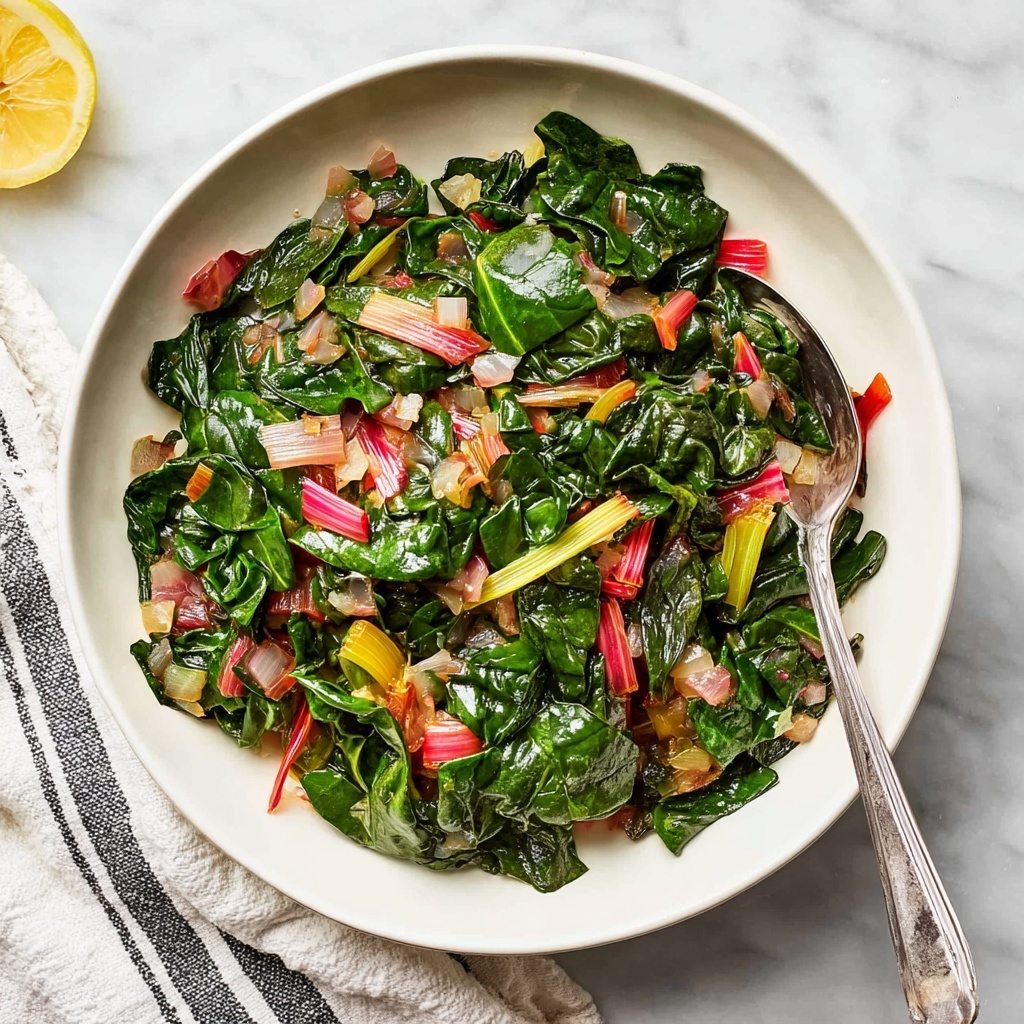
If you’re looking to add a fresh, vibrant, and nutritious side to your table, this Sautéed Swiss Chard Recipe is just what you need. It’s a brilliant way to highlight the hearty texture and slightly earthy flavor of Swiss chard, all while being quick to prepare and incredibly versatile. With simple ingredients coming together in a matter of minutes, you’ll enjoy a dish that bursts with color and taste, making it a favorite for weeknight dinners and special gatherings alike.

Ingredients You’ll Need
This Sautéed Swiss Chard Recipe calls for just a handful of wholesome ingredients, each playing a vital role in enhancing the dish’s natural flavors and textures. These essentials are easy to find and come together to create a comforting, satisfying dish that feels fresh and homey.
- 2 bunches of Swiss chard (or rainbow chard): The star of the dish, providing vibrant leaves and crunchy stems that add color and texture.
- 2 tablespoons olive oil: Builds a silky base for sautéing and adds richness with its fruity notes.
- 1/2 medium yellow onion, diced: Brings a subtle sweetness and depth to balance the slight bitterness of chard.
- 2 cloves garlic, minced: Lends aromatic warmth and a punch of flavor that wakes up the palate.
- 1/2 teaspoon kosher salt: Enhances all the flavors and balances any bitterness.
- 1/4 teaspoon ground black pepper: Adds gentle heat and complexity.
- Optional – squeeze of fresh lemon juice: A bright, tangy finishing touch to lift the dish.
How to Make Sautéed Swiss Chard Recipe
Step 1: Prep and Clean the Chard
Start by rinsing the Swiss chard thoroughly to remove any dirt or grit hiding in those lovely leafy folds. Trim off the ends of the stems, especially if you spot any wilted or damaged pieces. This clean slate helps ensure your sauté turns out fresh and pure in flavor.
Step 2: Separate Leaves and Stems
Carefully strip the leaves away from the stems. Roughly chop the leaves so they cook evenly, and dice the stems into about 1/2 inch pieces. The stems need a bit more cooking time, so keeping them uniform ensures perfect texture.
Step 3: Warm Up the Olive Oil
Place a large skillet on medium heat and pour in the olive oil. Heating the oil just right allows it to coat the ingredients beautifully and infuse the dish with richness without smoking or burning.
Step 4: Sauté Onion and Stems
Start by tossing the diced onion into the hot oil, letting it sauté for about 4 minutes until it softens and turns slightly golden. Then add the chopped chard stems, cooking for another 3 minutes. This step softens the sturdy stems and builds a flavorful base.
Step 5: Add Garlic Briefly
Stir in the minced garlic and let it sauté for just 30 seconds. Garlic roasts quickly and can become bitter if overcooked, so a brief sauté releases its aroma perfectly without bitterness.
Step 6: Wilt the Leaves
Finally, add the chopped Swiss chard leaves. Toss them in the pan just until they start to wilt and turn vibrant green. This usually takes no more than a couple of minutes and preserves the leaves’ tenderness and color.
Step 7: Season and Serve
Take the skillet off the heat and sprinkle on kosher salt and ground black pepper to taste. For an extra bright touch, squeeze some fresh lemon juice over the chard. Give everything a good stir and serve immediately, savoring those perfectly sautéed, tender greens.
How to Serve Sautéed Swiss Chard Recipe

Garnishes
Simple garnishes like a sprinkle of toasted pine nuts, a dusting of freshly grated Parmesan, or some chili flakes can elevate the dish without overwhelming its natural charm. A few lemon wedges on the side are also great for those who love an extra burst of brightness.
Side Dishes
This sautéed Swiss chard pairs beautifully with roasted chicken, grilled fish, or your favorite hearty grain like quinoa or farro. It also complements richly flavored dishes like creamy polenta or garlic mashed potatoes, adding a fresh, green balance to the plate.
Creative Ways to Present
For something a bit different, try folding this Swiss chard into a savory tart or frittata, or use it as a vibrant topping for warm whole grain bread with a drizzle of olive oil. It also shines tossed with pasta or folded into grain bowls for a nutritious meal.
Make Ahead and Storage
Storing Leftovers
Leftover sautéed Swiss chard keeps well in an airtight container in the refrigerator for up to 3 days. Make sure it’s cooled to room temperature before storing to maintain the best texture and flavor.
Freezing
If you want to keep it longer, freezing is an option. Let the chard cool completely, then pack it into freezer-safe bags or containers. It’s best used within 2 months to enjoy the freshest taste, although the texture may soften slightly upon thawing.
Reheating
Reheat the chard gently in a skillet over low heat or microwave it with a splash of water to prevent drying out. Adding a small drizzle of olive oil when reheating can help restore the silky texture and flavor.
FAQs
Can I use other types of chard in this Sautéed Swiss Chard Recipe?
Absolutely! Rainbow or red chard works just as well and adds lovely colors to your dish. Just make sure to cook the stems a bit longer since they tend to be tougher.
Is it necessary to separate the leaves and stems when cooking?
Yes, separating helps because the stems require more cooking time to become tender, while the leaves wilt very quickly. This ensures everything reaches perfect doneness without overcooking.
Can I add other vegetables or seasonings to this recipe?
Feel free to experiment! Mushrooms, bell peppers, or a pinch of crushed red pepper flakes can add wonderful layers of flavor, but the recipe is deliciously simple on its own.
What is the best way to clean Swiss chard?
Rinse each leaf under cold, running water and gently rub to remove any soil. Multiple rinses may be necessary as grit can hide between the stems and veins.
Is sautéed Swiss chard healthy?
Definitely! Swiss chard is rich in vitamins A, C, and K, plus minerals like magnesium and potassium. This sautéed preparation preserves nutrients while delivering a tasty and low-calorie side dish.
Final Thoughts
There’s something truly special about a simple dish done right, and this Sautéed Swiss Chard Recipe is a wonderful example. It’s fresh, colorful, and full of flavor but incredibly easy to make even on the busiest days. I hope you give this recipe a try and discover just how effortlessly delicious Swiss chard can be on your plate!
Print
Sautéed Swiss Chard Recipe
- Prep Time: 5 minutes
- Cook Time: 10 minutes
- Total Time: 15 minutes
- Yield: 4 servings
- Category: Side Dish
- Method: Frying
- Cuisine: American
- Diet: Gluten Free
Description
A simple and healthy recipe for sautéed Swiss chard that highlights the vegetable’s natural flavors with garlic, onion, and a hint of lemon juice. Perfect as a quick side dish ready in just 15 minutes.
Ingredients
Vegetables
- 2 bunches of Swiss chard (or rainbow chard)
- 1/2 medium yellow onion, diced
- 2 cloves garlic, minced
Seasonings & Oils
- 2 tablespoons olive oil
- 1/2 teaspoon kosher salt
- 1/4 teaspoon ground black pepper
- Optional: squeeze of fresh lemon juice
Instructions
- Wash and trim: Wash the Swiss chard thoroughly to remove any grit. Trim the ends of the stems to discard any broken or wilted parts.
- Chop: Separate the leaves from the stems. Roughly chop the leaves and dice the stems into 1/2 inch pieces for even cooking.
- Heat oil: Heat the olive oil in a large skillet over medium heat until shimmering.
- Sauté onion and stems: Add the diced onion to the skillet and sauté for about 4 minutes until translucent. Then add the chard stems and sauté for another 3 minutes until they start to soften.
- Add garlic: Stir in the minced garlic and sauté for about 30 seconds until fragrant but not browned.
- Cook leaves: Add the chopped chard leaves and sauté just until wilted, about 1-2 minutes.
- Season and serve: Remove the pan from heat. Sprinkle with kosher salt and ground black pepper. Optionally, add a squeeze of fresh lemon juice for brightness. Stir well and serve immediately.
Notes
- Be sure not to overcook the chard leaves; they should just wilt to preserve their vibrant color and nutrients.
- Feel free to substitute rainbow chard for traditional Swiss chard if you want a more colorful dish.
- Adding lemon juice at the end helps enhance the chard’s natural flavors and balances any bitterness.
- This dish pairs well with grilled meats, fish, or can be mixed into grain bowls or pastas.